
Can a high power induction burner be used with non - stick cookware?
Jul 02, 2026
Leave a message
When it comes to modern cooking technology, high power induction burners have emerged as a game - changer. As a dedicated supplier of High Power Induction Burner, I often encounter a common question from customers: Can a high power induction burner be used with non - stick cookware? In this blog, I will delve into this topic from a scientific and practical perspective.
Understanding High Power Induction Burners
Before we address the core question, let's first understand what a high power induction burner is. These devices operate on the principle of electromagnetic induction. An alternating current passes through a coil beneath the cooking surface, creating a magnetic field. When a compatible cookware is placed on the surface, the magnetic field induces an electric current in the cookware, which in turn generates heat directly within the cookware itself.
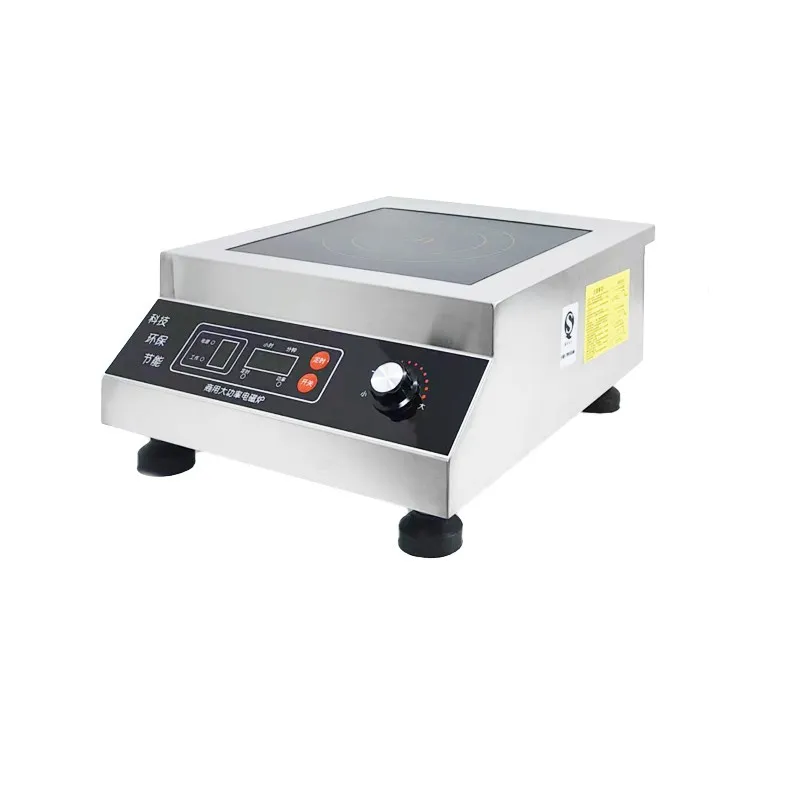
High power induction burners typically offer a higher wattage compared to regular induction burners. This high power output translates into faster heating times, precise temperature control, and the ability to handle large - scale cooking tasks. They are especially popular in commercial settings such as restaurants, where quick and efficient cooking is essential. Our Induction Stove for Restaurant is a prime example of a high - performing induction device designed to meet the demanding needs of professional kitchens.
Non - Stick Cookware: Composition and Function
Non - stick cookware is coated with a layer of a non - stick material, most commonly polytetrafluoroethylene (PTFE), also known as Teflon. This coating has a low coefficient of friction, which prevents food from sticking to the pan during cooking. It makes cooking and cleaning easier, as less oil is required and food can be removed effortlessly.
Non - stick cookware comes in various types, including those made of aluminum, stainless steel, or a combination of materials with a non - stick surface. The key feature is the non - stick coating, which is designed to withstand normal cooking temperatures. However, it does have its limitations, especially when it comes to high heat and abrasion.
Compatibility Issues
The primary concern when using a high power induction burner with non - stick cookware lies in the material compatibility. For an induction burner to work, the cookware must be made of a ferromagnetic material, such as cast iron or magnetic stainless steel. This is because the magnetic field generated by the induction burner needs to interact with the cookware to induce the electric current that produces heat.
Most non - stick cookware is made of aluminum or non - magnetic stainless steel, which are not ferromagnetic. As a result, these non - ferromagnetic non - stick pans will not work directly on a high power induction burner. The magnetic field will not be able to induce an electric current in the cookware, and thus, no heat will be generated.
However, there are some non - stick cookware options that are induction - compatible. These pans are usually made of magnetic stainless steel with a non - stick coating on the inside. They combine the benefits of non - stick cooking with the efficiency of induction heating. When looking for such cookware, check the product label for the “induction - compatible” mark.
Another aspect to consider is the heat resistance of the non - stick coating
High power induction burners can generate a significant amount of heat very quickly. The non - stick coating on cookware may start to degrade if exposed to temperatures above its recommended limit. Most non - stick coatings are designed to withstand temperatures up to around 260 - 288 degrees Celsius (500 - 550 degrees Fahrenheit). If the high power induction burner overheats the cookware beyond this range, the non - stick coating can break down, releasing harmful fumes and reducing the pan's non - stick properties.
Practical Tips for Using Non - Stick Cookware on High Power Induction Burners
If you have induction - compatible non - stick cookware and want to use it on a high power induction burner, here are some practical tips to ensure a positive cooking experience:
- Start with low heat: Begin cooking at a low power setting. High power induction burners heat up rapidly, and starting with a low setting can prevent overheating of the non - stick coating.
- Use the right size of cookware: Make sure the cookware matches the size of the induction burner's cooking zone. A mismatched size can lead to uneven heating and potential overheating of the edges of the pan.
- Avoid using metal utensils: Metal utensils can scratch the non - stick coating. Instead, use wooden, silicone, or nylon utensils to protect the coating.
- Monitor the temperature: Keep an eye on the cooking process and adjust the power as needed. If you notice the food is cooking too quickly or the pan seems to be getting too hot, reduce the power.
Applications in Different Settings
In a home kitchen, the combination of a high power induction burner and non - stick cookware can offer convenience and efficiency. Home cooks can enjoy the quick heating of the induction burner while benefiting from the easy - cleaning features of non - stick cookware. For example, making a quick omelet in the morning can be done in a few minutes on a high power induction burner using an induction - compatible non - stick pan.
In a commercial kitchen, such as restaurants, the situation is a bit more complex. Restaurants often require high - volume cooking, and high power induction burners like our Highest Watt Induction Cooktop are ideal for this purpose. While non - stick cookware can be useful for certain dishes, chefs need to ensure that the cookware is induction - compatible and can withstand the high - intensity cooking. For instance, when making delicate sauces or stir - frying vegetables in a non - stick pan on a high power induction burner, careful temperature control is crucial.

Conclusion
In conclusion, while a high power induction burner cannot be used with most non - stick cookware due to the material requirements of induction heating, there are induction - compatible non - stick pans available on the market. When using such pans, it is important to be aware of the heat resistance of the non - stick coating and follow proper cooking practices to ensure the longevity of the cookware and a safe cooking environment.
If you are interested in exploring our range of high - quality high power induction burners, we invite you to contact us for procurement discussions. Our team of experts is ready to assist you in finding the perfect solution for your cooking needs, whether it is for a home kitchen or a commercial restaurant.
References
- “Induction Cooking: How It Works and Its Advantages,” Consumer Reports.
- “Non - Stick Cookware: Coating Technologies and Safety,” Journal of Food Science.
- Manufacturer's manuals of high power induction burners and non - stick cookware.
Send Inquiry